How to Stop Drinking at Night Without a Willpower Fight
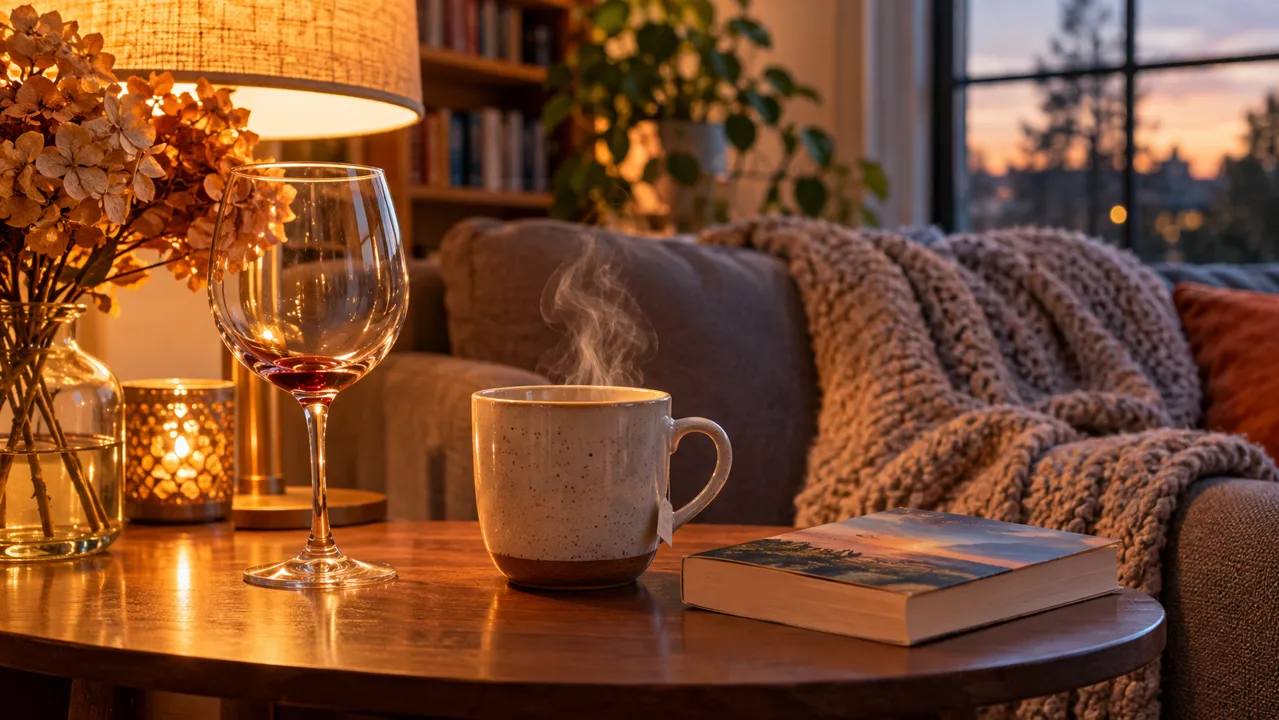
To stop drinking at night, you change the evening, not just the glass. Most nightly drinking is not a decision you make at 9 p.m. It is a sequence that started at 5:45, when the day ended, the keys hit the counter and your hand went to the same cabinet it always goes to. If you only try to say no at the moment of the pour, you are using your tiredest, most depleted self to fight your most practiced habit. That is a bad matchup, and it is why "I'll just have none tonight" so often lasts until Thursday.
This guide gives you a different plan: find the cue, keep the reward, swap the routine, and rehearse the new evening until it feels normal. It takes about ten minutes a day and it does not require you to announce anything to anyone.
Why the nightly drink feels automatic
Habits are the brain saving effort. Do the same thing in the same place at the same time often enough and the decision moves out of the thinking part of your head and into something closer to a reflex. By the time you notice the thought "I could use a drink," your body is already walking toward the kitchen.
A nightly drink usually carries three jobs at once:
- A switch. It marks the line between work mode and off-the-clock.
- A reward. After a long day it feels earned, and your brain files it that way.
- A soother. Stress, boredom, loneliness or restlessness get a quick, reliable answer.
Notice that none of those jobs is "taste." That matters, because it means the need underneath is legitimate. The goal is not to remove the need. It is to let something else do the job.
Step 1: Write down your real evening
For three nights, do not change anything. Just note, in a phone note or on paper:
- What time did the first thought of a drink show up?
- Where were you and what had just happened? Parking the car, closing the laptop, the kids finally in bed.
- What were you feeling? Wiped out, wound up, flat, annoyed.
- What did you hope the drink would do? Quiet the noise, mark the end of the day, give you something to look forward to.
Most people find the trigger is smaller and more specific than they assumed. "I drink at night" becomes "I pour a glass within ten minutes of sitting down on the couch after the dishes." That is a cue you can work with.
Step 2: Keep the reward, change the routine
The habit loop has a cue, a routine and a reward. You cannot delete the cue (the evening is going to happen), and you should not try to delete the reward (you deserve to unwind). You change the middle.
Build a short "evening switch" that does the same three jobs:
- The switch: change clothes, wash your face, step outside for two minutes, or play the same song every night.
- The reward: something you actually look forward to. A good cup of tea, a cold drink you like in a real glass, a show you keep for this hour.
- The soother: slow breathing, a short walk, or a guided session with headphones.
The trick is that it has to be specific and ready. At 6 p.m. you will not invent a plan. You will follow the one you set up at noon.
Step 3: Rehearse it, because willpower is not a plan
Rehearsal is what separates a plan that holds from a plan that sounds good. In a calm moment, picture the cue. See yourself walking into the kitchen. See the old hand movement. Now picture the new one: kettle on, headphones in, the first slow breath.
This is the idea behind guided self-hypnosis and cognitive behavioral hypnotherapy: deep relaxation makes you open to suggestion, and you use that window to practice the new response on purpose, so it is easier to reach for under pressure. Lucidra is built around exactly that. You take a short quiz about your drink, your triggers and how long it has been a habit, and you get a personalized program in a web app: daily sessions of around 10 minutes, in 4, 8 or 12 week plans, with progress tracking and short lessons on how the habit works.
Self-hypnosis is not mind control and it is not magic. You stay in charge. It is a structured way to relax and rehearse, and for many people that rehearsal is the missing piece when they try to change an evening on pure grit.
A realistic first week
You do not need to give up everything on day one. All-or-nothing plans are where most attempts collapse. Try this:
| Day | What you do |
|---|---|
| 1 | Do your 10-minute session at your usual drink time. Do not change the drink yet. |
| 2 | Same session. Add your "evening switch" before it. |
| 3 | Same. Notice where the pull is strongest. |
| 4 | Delay your first drink by 30 minutes. Use the session in that gap. |
| 5 | Choose one night to swap the drink for your reward. |
| 6 | Repeat the swap. Note how you slept. |
| 7 | Look back at the notes and decide your next target. |
The first week is about practicing the pause. If you drink on one of the swap nights, that is information, not failure. Write down what was different and adjust.
What to do on the hard nights
Some evenings will be harder: a bad day, a social event, an argument. Plan for them ahead of time.
- Pre-decide. "On Friday I will have my tea first and decide after." Deciding in advance removes the in-the-moment bargaining.
- Make the first move small. Ten minutes of the session before you decide anything.
- Change the scenery. Take the first part of the evening somewhere that is not your drinking spot.
- Tell one person. Not an announcement, just "I'm trying a quieter evening this month."
Who this fits and who should talk to a doctor first
This approach is for people who want to cut back or stop an evening drinking habit and want a calm, private way to do it. It is not a medical treatment, it does not diagnose anything, and it is not a substitute for professional care.
If you drink heavily every day, or you notice shakiness, sweating, anxiety or trouble sleeping when you skip a drink, talk to a doctor before you stop. Stopping suddenly after heavy, regular drinking can be risky, and a clinician can help you do it safely. A habit plan can then sit alongside that care.
What it feels like when it works
The first sign is usually not dramatic. It is an evening where the pour does not happen automatically, and you realize it halfway through the night. Then another. Mornings feel clearer. You stop negotiating with yourself at 6 p.m. The glass becomes one option rather than the only one.
That quiet shift is the result worth wanting. If you want a plan built around your own triggers and a pace you can keep, Lucidra starts with the quiz and gives you a program you can follow in ten minutes a day.
Where to go next
If the cue is the part you most want to understand, read about the habit loop. If your trouble is the 6 p.m. hour specifically, see how to break the wine o'clock habit. And for the moment the urge actually hits, what to do when you crave a drink gives you a short script to use in the next ten minutes.