How to Break the Wine O'Clock Habit
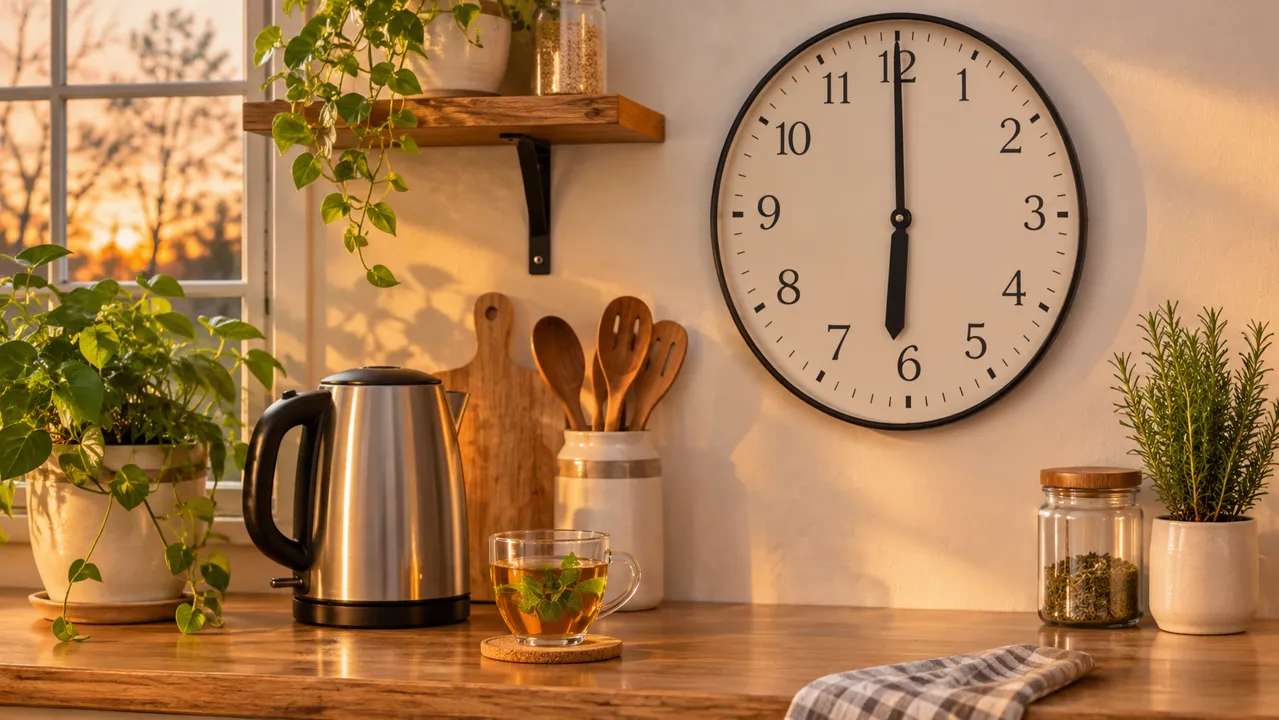
Breaking the wine o'clock habit means giving the hour a new meaning. The glass is rarely the point. What matters is what it represents: the day is over, you did enough, now you get to relax. The phrase itself is a clue. We named a time on the clock after the drink, which means the clock became the trigger. To change the habit, you keep the break, the reward and the exhale, and you change what happens at 6.
This guide shows you how to do that in a way that feels like gaining an evening rather than losing a glass.
How "wine o'clock" gets built
Wine o'clock is a textbook habit loop. A cue (the time, the kitchen, the sound of the kids finishing homework) triggers a routine (open the bottle, pour) that delivers a reward (relaxation, a sense of closure). Repeat it several hundred times and your brain no longer weighs the decision. It simply runs the script.
Culture reinforces it. Memes, mugs and group chats make the glass at the end of the day a shared joke, which makes it feel normal, even expected. That normalcy is also why many people find it hard to notice when it has turned from choice to reflex.
You may recognize some of these signs:
- you feel a tug at the same time every day;
- you pour before you have decided whether you want it;
- one glass often becomes two or three without a clear decision;
- skipping it makes the evening feel flat or tense;
- you feel a little regret or fog the next morning.
None of this is a diagnosis. It is just a map of the pattern.
Step 1: Identify what the glass is doing
For a week, jot down what you were feeling when the thought arrived. People typically find one of four jobs.
- Transition. I need a signal that work is over.
- Reward. I had a hard day and deserve something.
- Soother. I am stressed, tired, lonely or overstimulated.
- Social. It is something we do together.
The same glass can do more than one job. Note the biggest.
Step 2: Build a replacement that does the same job
Each job has a replacement.
- Transition: Change clothes, take a five-minute shower, step outside, play one song, light a candle. Make it a small ceremony you do every evening in the same order.
- Reward: Something you can look forward to. A drink with real character in a real glass, a piece of good chocolate, a show you save for this hour.
- Soother: Slow breathing with a longer exhale, a short walk, a guided relaxation session.
- Social: Suggest a different shared ritual: tea on the porch, a walk after dinner, a board game.
Prepare it before 6 p.m. If the replacement is not ready, you will default to the old one.
Step 3: Rehearse the new hour
This is the part that most tips skip. A new routine is fragile for the first few weeks because the old one is deeply grooved. Rehearsal builds the groove for the new one.
Guided self-hypnosis uses relaxed focus to mentally walk through the cue and the new response. You imagine the clock turning six, the old pull and your new action, again and again, until it starts to feel familiar. Lucidra is organized around this: a short quiz about your drink and triggers, then a personalized web app program with daily sessions of around 10 minutes, in 4, 8 or 12 week plans, with progress tracking and short lessons. The best time to run your session is just before the usual hour, so the new routine is fresh when the cue arrives.
It does not remove your agency. You are practicing a choice you already want to make.
A two-week starter plan
Days 1-3: Add your session and your transition ritual at the usual time. Keep your usual drink if you wish. You are building the new pathway.
Days 4-7: Delay the first glass by 30 minutes. Fill the gap with the ritual. Note how strong the pull is at the start and 20 minutes later.
Days 8-10: Choose three evenings to replace the wine entirely with your reward drink. Notice what you do with the extra evening.
Days 11-14: Decide your target for the next month, such as no wine on weeknights or a smaller pour only with dinner.
Three scenes: the same hour, three ways
It helps to see the shift concretely.
The old scene. You walk in at 5:50, drop the bag, and your hand goes to the bottle before your coat is off. By 6:05 the first glass is half gone and the day has dissolved into the couch. The second glass arrives without a decision. At 10 p.m. you are tired in a heavy way and a little annoyed with yourself.
The transition scene. You walk in, change clothes and put the kettle on. You do your ten-minute session with headphones while the tea steeps. When you finish, the sharp edge of the day is softer and the pull has dropped to a murmur. You cook dinner. You still have the evening, and you are still awake for it.
The flexible scene. On Friday, you decide that wine belongs with dinner and nothing before. You have your tea at 6, dinner at 7, one glass poured on purpose. You enjoy it more because you chose it.
All three are possible. The goal is to move from the first scene to whichever of the other two suits your life.
Small upgrades that make the new hour feel good
- Use a real glass for the replacement. Pouring sparkling water or a shrub into stemware makes it feel like an occasion.
- Keep one thing back for 6 p.m. A podcast, a book, a hobby you only touch after work.
- Make the first sip special. A slice of citrus, a sprig of rosemary, ice that clinks. Little ritual details matter.
- Move the bottle. If wine is not at eye level in the kitchen, the cue weakens.
Handling the rough days
Bad days will test the plan. Pre-decide your move: "If the day is rough, I will do my session, make tea and decide after." Often the urge passes in the gap. If it does not and you drink, treat it as information, note what happened and return to the plan next evening.
Keep the good parts
You are not trying to be someone who never relaxes. You are trying to keep the evening and lose the automatic part. Keep the cooking, the music, the long bath, the phone call with a friend, and let wine be something you choose on purpose when you do.
A word on safety
If you drink heavily every day, or you feel shaky, sweaty or anxious when you skip, speak to a doctor before you stop. This guide is not medical advice and it does not treat alcohol dependence.
The payoff
Within a few weeks of repeating the new routine, many people notice that 6 p.m. stops feeling like a cliff. The hour becomes a space you spend deliberately. That shift, from a reflex to a choice, is the thing worth aiming for.
For ideas on what to put in the glass instead, see alcohol-free drinks for the evening. To go deeper on the mechanism, read about the drinking habit loop, and for the full evening plan see how to stop drinking at night. When you want a guided structure, Lucidra begins with a quiz.